



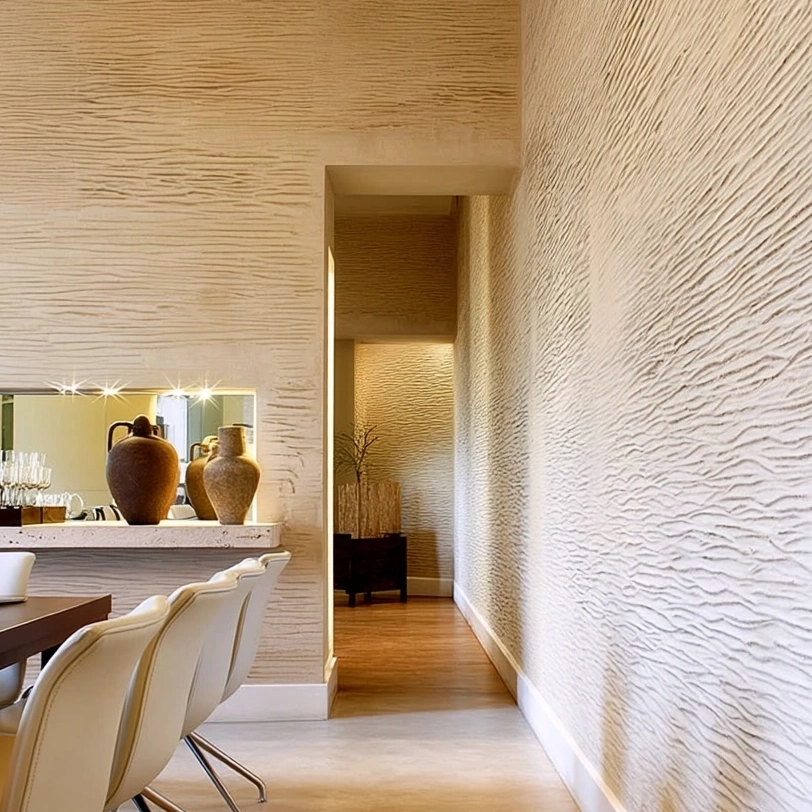
Travertino Venetian Plaster draws its inspiration from the alluring beauty of natural travertine stone, a material renowned for its timeless elegance and sophisticated texture. This plaster is more than just a wall finish; it is a decorative technique that intricately combines art and architecture, reflecting both historical roots and modern preferences.
The unique characteristics of Travertino Venetian Plaster lie in its ability to mimic the natural patterns and colors found in travertine. With its subtle variations in hue and texture, this plaster creates a warm, inviting atmosphere that enhances the aesthetic appeal of any space. Its palette ranges from earthy tones to vibrant shades, offering a versatility that allows designers to tailor the look to their specific requirements.
Travertino Venetian Plaster not only serves as a functional element in design but also resonates with those who appreciate the artistry of craftsmanship. By incorporating this material into their projects, designers and homeowners alike can create spaces that are not only beautiful but also imbued with character and elegance.


In contrast to traditional wall paints, Travertino Venetian Plaster provides a rich, three-dimensional appearance that interacts beautifully with light. This dynamic quality results in a surface that appears to shift and change throughout the day, depending on the ambient light and angle of view. It provides a luxurious finish that effortlessly elevates the visual interest of interiors.
Another remarkable feature of Travertino Venetian Plaster is its environmental sustainability. Composed primarily of natural materials, it aligns with the growing demand for eco-friendly building solutions. Its durability and low-maintenance nature further its appeal, making it a potent choice for both residential and commercial applications. The seamless application can be customized to suit various styles, from contemporary to classical, solidifying its status as a versatile wall treatment.
Travertino Venetian Plaster is a sophisticated finish that embodies both elegance and uniqueness, making it a popular choice in modern interior design. One of its most distinguishing features is the presence of dragged pits and troughs, which closely mimic the authentic appearance of real travertine stone. These textures are not mere decorative elements; they actively contribute to the overall aesthetic and tactile experience of a space.
The rough and polished sections created during the application process create a striking contrast, enhancing the visual depth and dimension of walls. As light interacts with its surface, the varied textures of Travertino Venetian Plaster finish allow for a dynamic play of shadows and highlights, further accentuating its beauty. Notably, these textures can evoke a sense of warmth and natural elegance, making environments feel inviting and sophisticated.
Another characteristic of this plaster is its intrinsic versatility, which allows it to adapt seamlessly to a range of design styles, from rustic to contemporary. Its color palette is generally derived from nature, comprising earthy tones that resonate well with organic materials like wood and stone. This characteristic is particularly advantageous, as it enables designers and homeowners to achieve cohesive aesthetic schemes that transcend traditional design boundaries.
Moreover, Travertino Venetian Plaster is known for its durability and long-lasting appeal. Unlike conventional wall paints, this plaster will not chip or fade easily, maintaining its beauty over time. Its ability to improve acoustics in a space and its resistance to moisture also contribute to its functionality as a building material. Ultimately, the characteristics of Travertino Venetian Plaster not only enhance the look of any interior but also ensure its enduring elegance and practicality.
Travertino Venetian Plaster is renowned for its remarkable versatility, allowing designers and homeowners alike to create an array of styles and textures that suit varying aesthetic preferences. One of the great advantages of this material is its compatibility with various stucco plasters, enabling professionals to craft unique finishes that stand out in both interior and exterior design.
When applied skillfully, Travertino can emulate the natural textures found in stone, offering a warm and sophisticated feel to any space. For instance, combining Travertino with a textured stucco can result in striking visual depth. This technique is particularly effective in creating rustic or Mediterranean-style interiors where natural finishes are sought after.
Moreover, Travertino is adaptable to different architectural styles. In modern designs, it can be polished to achieve a sleek, high-gloss finish that adds a touch of elegance to contemporary spaces. On the other hand, a more matte finish can be achieved for a more subdued, understated look, thus accommodating various design sensibilities.
In exterior applications, Travertino Venetian Plaster can be used to enhance facades, making structures more inviting and appealing. When paired with classic stucco, the combination not only draws attention but also contributes to the building’s overall durability. The ability to blend with other materials allows designers to craft cohesive outdoor spaces that reflect personal taste while complementing the surrounding environment.
The flexibility of Travertino extends to color options as well. By incorporating various pigments during the mixing process, the plaster can be tailored to fit specific palettes, whether that be soft earth tones for a natural feel or vibrant shades for a contemporary twist. This adaptability ensures that the final application can achieve a desired ambiance and cohesiveness that resonates with the intended design vision.
The application of Travertino Venetian Plaster requires a meticulous approach to achieve a flawless finish. First, the surface must be prepared adequately, which includes cleaning and ensuring it is free of dust, grease, and any loose materials. For best results, a base coat or primer is recommended to promote adhesion. Once the surface is ready, the Travertino plaster can be mixed according to the manufacturer’s instructions, ensuring the ratios of pigments, binders, and additives are carefully followed to maintain the desired color and texture.
Applying Travertino Venetian Plaster involves using a trowel or spatula to spread the mixture evenly across the surface. It is essential to apply it in thin, even layers, allowing each layer to dry before applying the next. The technique often involves a combination of circular and linear motions to create the unique textures and variations that characterize Travertino plaster. After multiple layers have been applied, a final burnishing step might be performed to achieve a polished, reflective finish, depending on the desired outcome.
Maintenance of Travertino Venetian Plaster is relatively simple, yet it plays a critical role in preserving its beauty and durability. It is crucial to regularly clean the plastered surfaces with a damp cloth or sponge to remove dirt and stains. For more stubborn marks, a mild detergent mixed with water can be used, followed by rinsing with clean water. Avoid the use of harsh chemicals or abrasive scrubbers, as these can damage the surface. In addition to cleaning, it’s advisable to apply a protective sealant every few years to enhance the plaster’s resistance to moisture and wear, ensuring that the Travertino Venetian Plaster retains its aesthetic appeal over time.

SERVICE AREA
Miami, Aventura , Bal Harbour , Boca Raton , Coconut Grove , Coral Gables , Delray Beach , Fisher Island , Fort Lauderdale , Golden Beach , Highland Beach , Hillsboro Beach , Jacksonville , Jupiter , Key Biscayne , Lighthouse Point , Manalapan , Orlando , Palm Beach , Parkland , South Florida

