



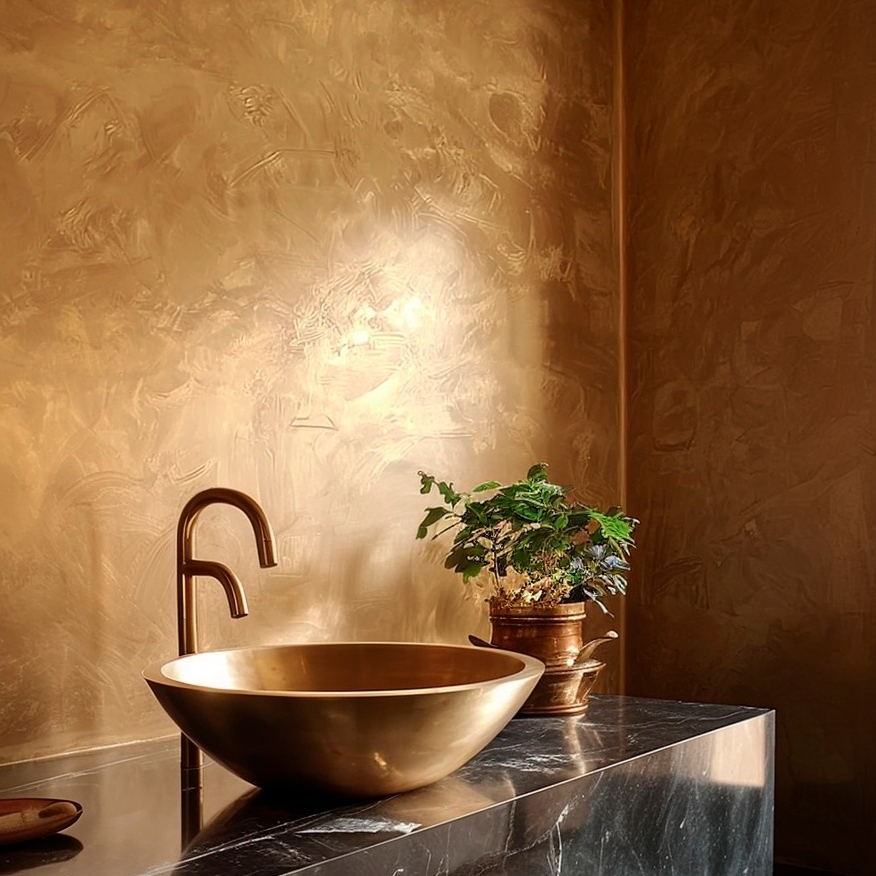
Metallic Marmorino is a sophisticated type of decorative polished plaster known for its unique aesthetic qualities and luxurious finish. This material is composed of a blend of natural lime, marble dust, and metallic pigments, which combine to create a refined and elegant appearance. One of the distinguishing characteristics of metallic marmorino is its soft satin finish, allowing for a subtle shimmer that can transform a standard wall into a work of art. The interplay of light on the surface creates dynamic visual effects that enhance the ambiance of any room.
The application of metallic marmorino requires skilled craftsmanship to achieve its signature look. When applied correctly, it provides not only beauty but also durability, making it a favored choice among interior designers and architects for various spaces. Its unique properties allow for versatility in design, as it can be tailored to different styles, from contemporary to classic. Furthermore, metallic marmorino is designed specifically for indoor use, ensuring that its qualities remain intact without the potential degradation caused by outdoor elements.
In terms of suitability, metallic marmorino is ideal for indoor applications, where its reflective qualities can be fully appreciated, especially in areas with varied lighting. The use of this decorative plaster has gained popularity in residential and commercial interiors, including living rooms, galleries, and hospitality venues, where a touch of elegance is desired. It's important to note that while metallic marmorino exhibits remarkable visual appeal, it is best maintained in controlled environments away from excessive moisture and direct sunlight, further underscoring its exclusive indoor designation.


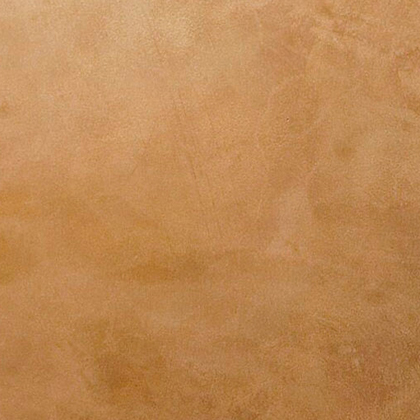


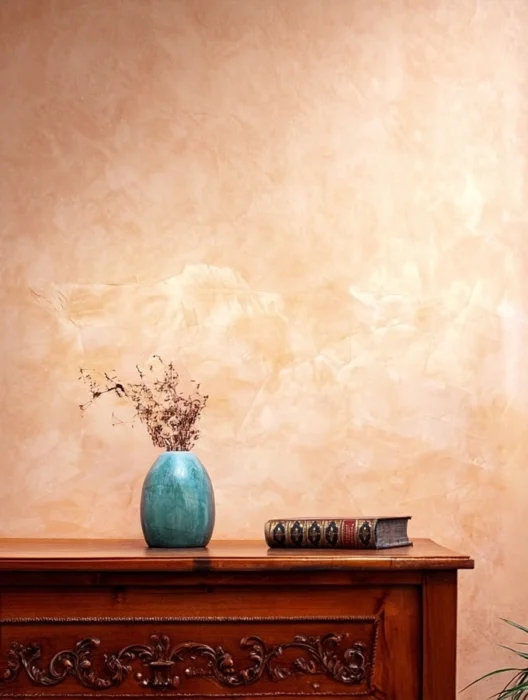
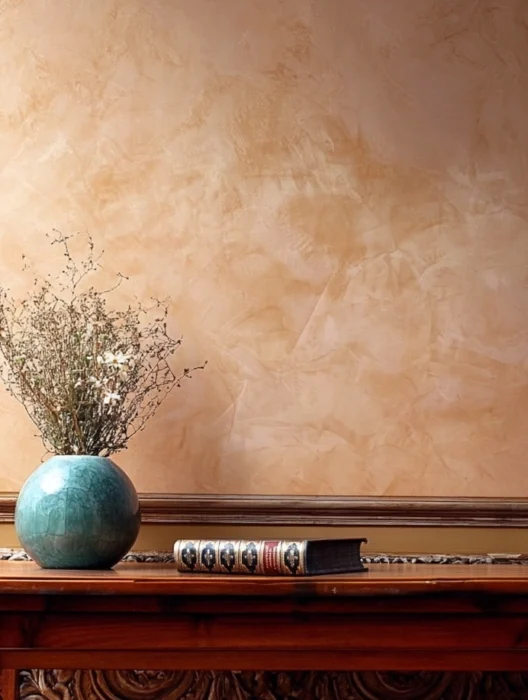
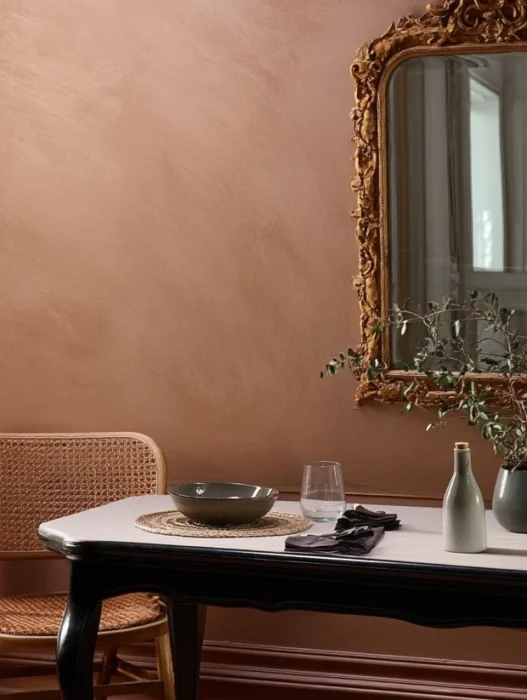

Metallic marmorino is renowned for its rich and versatile colour palette, which plays a crucial role in defining the atmosphere of any interior space. The classic choices of gold, silver, bronze, and copper are particularly significant as they can convey different moods and styles. Each of these hues carries its own distinct characteristics. For instance, gold tends to evoke warmth and luxury, making it an ideal choice for spaces aimed at an opulent feel, like living rooms or master bedrooms. On the other hand, silver offers a cooler tone that can create a contemporary and sophisticated appearance, making it suitable for modern office spaces or minimalist interiors.
Bronze and copper, with their earthy tones, provide a touch of rustic charm and can serve as excellent accents in spaces that strive for a cozy or vintage vibe. Furthermore, these materials can enhance textures and light reflections, showcasing the intrinsic beauty of each shade. Designers may opt to pair traditional metallics with neutral backdrops to allow their brilliance to shine, or they may combine them in layered applications for a more dynamic effect.
Customization is a hallmark of metallic marmorino, granting homeowners the ability to express their unique style. Designers often explore bespoke options, such as blending colours to create custom shades tailored specifically to fit the desired aesthetic. Furthermore, effects like marbling or textured finishes can be applied to enhance depth and character. Ultimately, whether one chooses a classic metallic finish or opts for a more personalized blend, metallic marmorino can transform any interior, bestowing it with elegance and individuality that resonates with its inhabitants.
Applying metallic marmorino requires careful attention to detail and a thorough understanding of the materials involved. The first step in the application process is to prepare the surface appropriately. Ensure that all walls are clean, dry, and free from any previous coatings that may affect adhesion. It is recommended to use a primer specifically designed for polished plaster, which will create a suitable base layer for the marmorino to adhere to.
Once the surface is primed and ready, gather the necessary tools and materials. You will need a stainless steel trowel, a sponge or synthetic brush, a mixing paddle, and water. Metallic marmorino should be mixed according to the manufacturer’s instructions to achieve the desired consistency. Generally, a thick paste is preferred to ensure proper application and finish.
After mixing, start by applying a thin, even layer of metallic marmorino to the surface using the trowel. Begin at the top, working your way down to avoid drips. Aim for a consistent thickness, typically between 1 to 2 mm. Allow the initial coat to dry completely before proceeding with the second layer. The second coat will enhance the color and sheen of the marmorino, so it’s essential to apply it smoothly.
To achieve the desired sheen, use the trowel to burnish the surface after the second coat starts to set but is still slightly damp. This process involves applying pressure and moving in circular motions to create a reflective finish. However, be cautious not to overwork the material, as this can lead to uneven results.
Common mistakes to avoid include applying the marmorino too thickly, which can result in cracking, and failing to allow adequate drying time between coats, leading to improper adhesion. By paying close attention to these techniques and embracing best practices, one can achieve a stunning decorative finish with metallic marmorino.
To ensure the lasting beauty of metallic marmorino finishes, regular maintenance is essential. These sophisticated surfaces require a unique cleaning approach, integrating both effectiveness and care for the delicate metallic pigments embedded within the plaster. Initially, dust and dirt should be delicately wiped away using a soft, dry microfiber cloth. This provides a preliminary maintenance routine that prevents dirt accumulation, which can dull the lustrous appearance of the metallic surface.
For deeper cleaning, a damp cloth should be employed. It is imperative to use plain water or a mild soap solution—harsh chemicals and abrasive cleaners can damage the finish and compromise its sheen. Homeowners are advised to avoid products containing ammonia or bleach, as these substances can lead to discoloration or deterioration of the metallic components. Instead, selecting pH-neutral cleaners is recommended to uphold the integrity of the marmorino finish.
In terms of repair and touch-ups, metallic marmorino is a bit more complex compared to standard plaster finishes. For minor scratches or scuffs, a simple application of the same metallic marmorino can restore the original appearance. It is advisable to consult with a professional to ensure consistency in color and texture. If larger areas are affected, an experienced artisan may be necessary to reapply the finish, ensuring proper blending with the surrounding surfaces.
In the long term, maintaining these luxurious finishes can significantly prolong their lifespan. Regular inspection can help identify issues before they escalate into major repairs, thereby preserving not just the appearance but also the value of your investment in decorative plaster. Ultimately, a consistent care routine combined with prompt touch-ups will allow homeowners to fully enjoy the timeless elegance of metallic marmorino finishes.

SERVICE AREA
Miami, Aventura , Bal Harbour , Boca Raton , Coconut Grove , Coral Gables , Delray Beach , Fisher Island , Fort Lauderdale , Golden Beach , Highland Beach , Hillsboro Beach , Jacksonville , Jupiter , Key Biscayne , Lighthouse Point , Manalapan , Orlando , Palm Beach , Parkland , South Florida

